Valuation Models
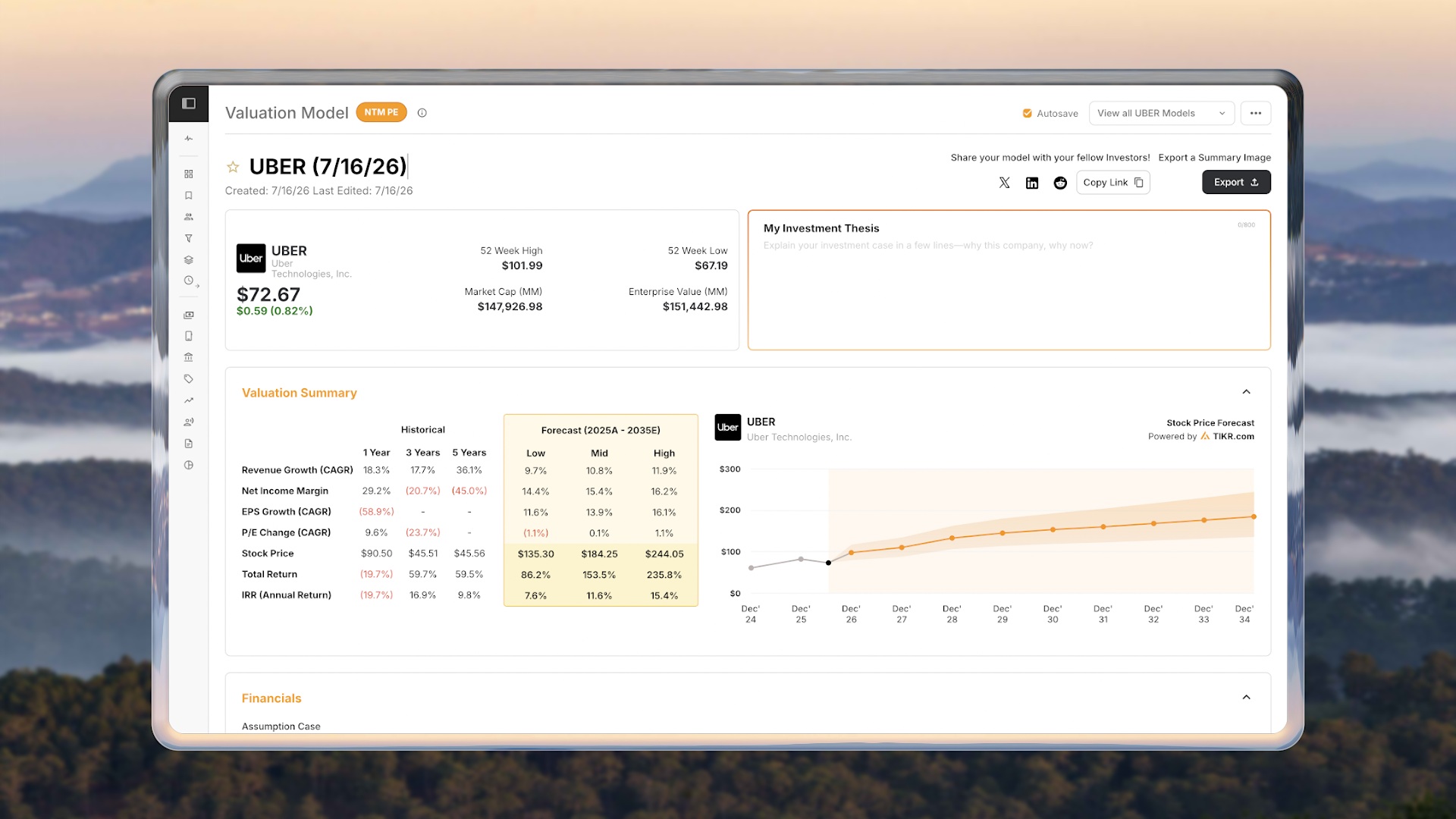
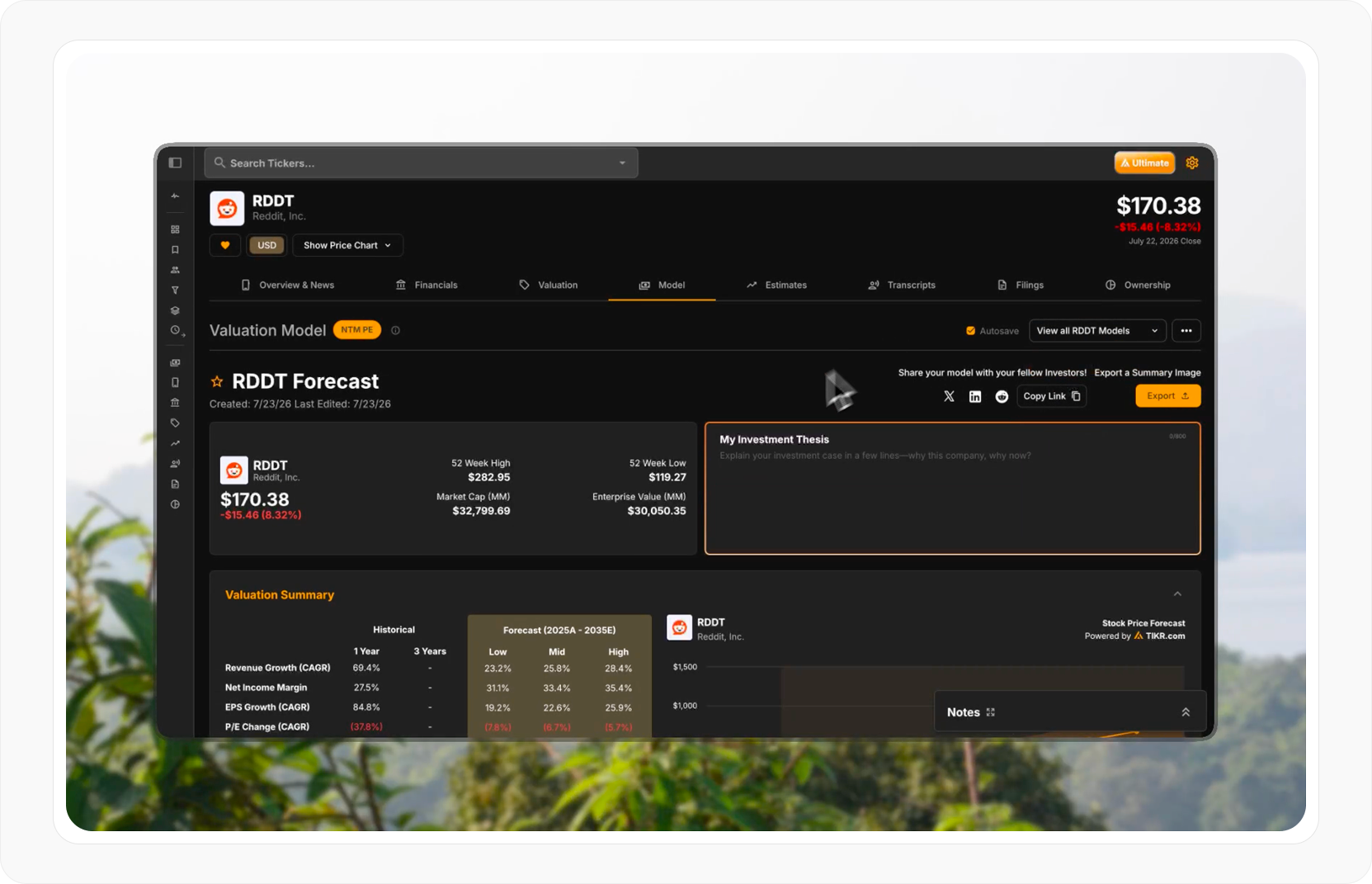
Designed two separate flows — for both advanced and novice investors — to forecast stock prices based on P/E valuation.
100,000 models were created in under a year, and the valuation hub became one of the top-trafficked pages on the platform.
Role: Product Designer — sole designer, product strategy + execution, marketing design
Team: CEO, Engineering (3), Growth/Marketing
Timeline: ~5 months
Business Objective
We wanted to create a feature that would extend TIKR from a data platform into a decision-making tool. The feature needed to:
- Drive higher ARPU through premium tier upgrades
- Expand product value for serious investors — our highest-paying users
- Create shareable outputs to support organic growth
- Position TIKR as a decision-making tool, not just a data platform
Creating a powerful research workspace where investors could monitor hundreds of companies and financial metrics in a single view — something serious investors were repeatedly requesting but our platform didn't yet support.
What was the Problem?
People had the data, but no way to turn it into conviction inside the product.
Through surveys and user feedback, we found that valuation modeling was a top-5 requested feature among our paid subscribers. Without it, users were forced to:
- Export data out of TIKR
- Rebuild models externally in Excel or Google Sheets
Existing solutions were either too complex for newer investors or too limited for advanced users. "Users had data, but no way to turn it into conviction inside the product."
Product Insight
Valuation modeling isn't one user — it's two distinct behaviors.
- Want quick answers
- Prefer simplified inputs (e.g. P/E assumptions)
- Often still learning valuation
- Want full control
- Need deeper inputs + longer projections
- Represent the majority of paying users
Key Design Challenges
- How do we support two user types without fragmenting the experience?
- How do we organize multiple models per company over time?
- How do we make outputs clear, visual, and shareable?
- How do we design for repeat usage — annual model updates?
- How do we integrate monetization without breaking UX?
Solution
1 · Dual modeling system (Guided vs Advanced)
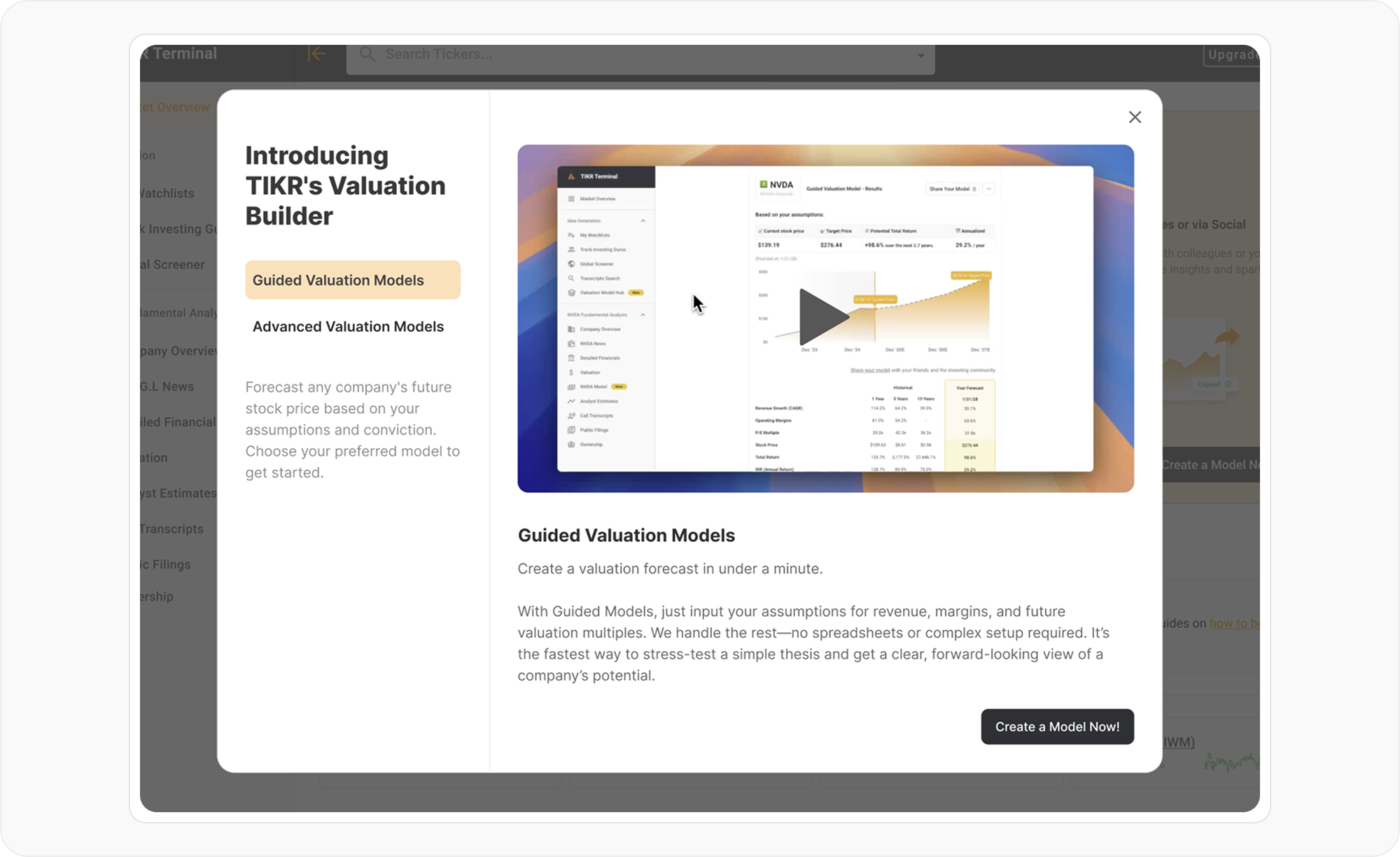
We created two entry points from a single feature — a Guided Model with simplified inputs and fast outputs (available on Free + Plus), and an Advanced Model with full control over assumptions, an expanded dataset, and longer projections (reserved for higher tiers). This let us onboard beginners while monetizing power users.
2 · Company-centric model hub
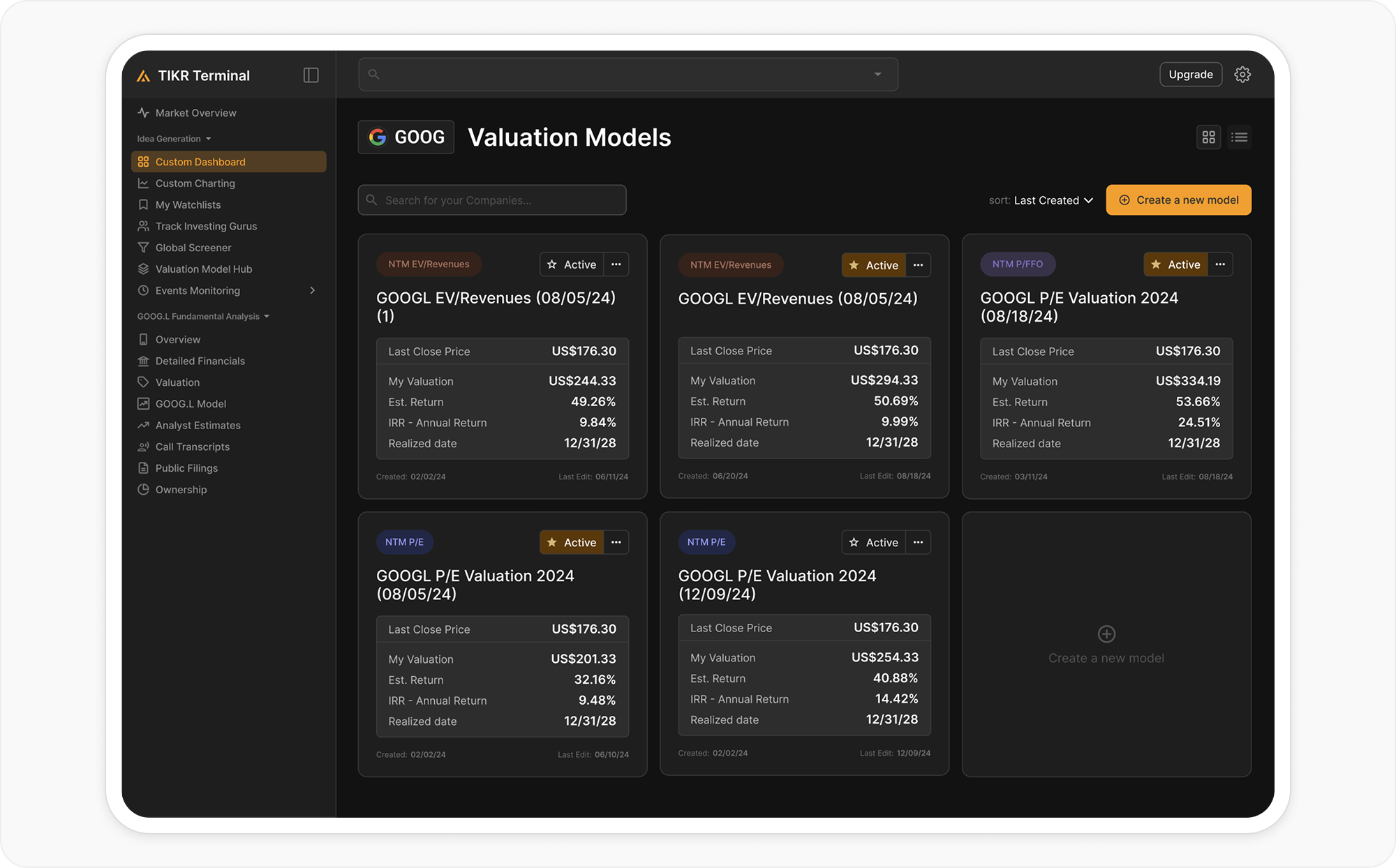
We structured models within each company, letting users create multiple models over time, compare assumptions, and track active vs. past models. This also set up future expansion into EV/Revenue, EV/EBITDA, and FCF-based models.
3 · Built-in shareability
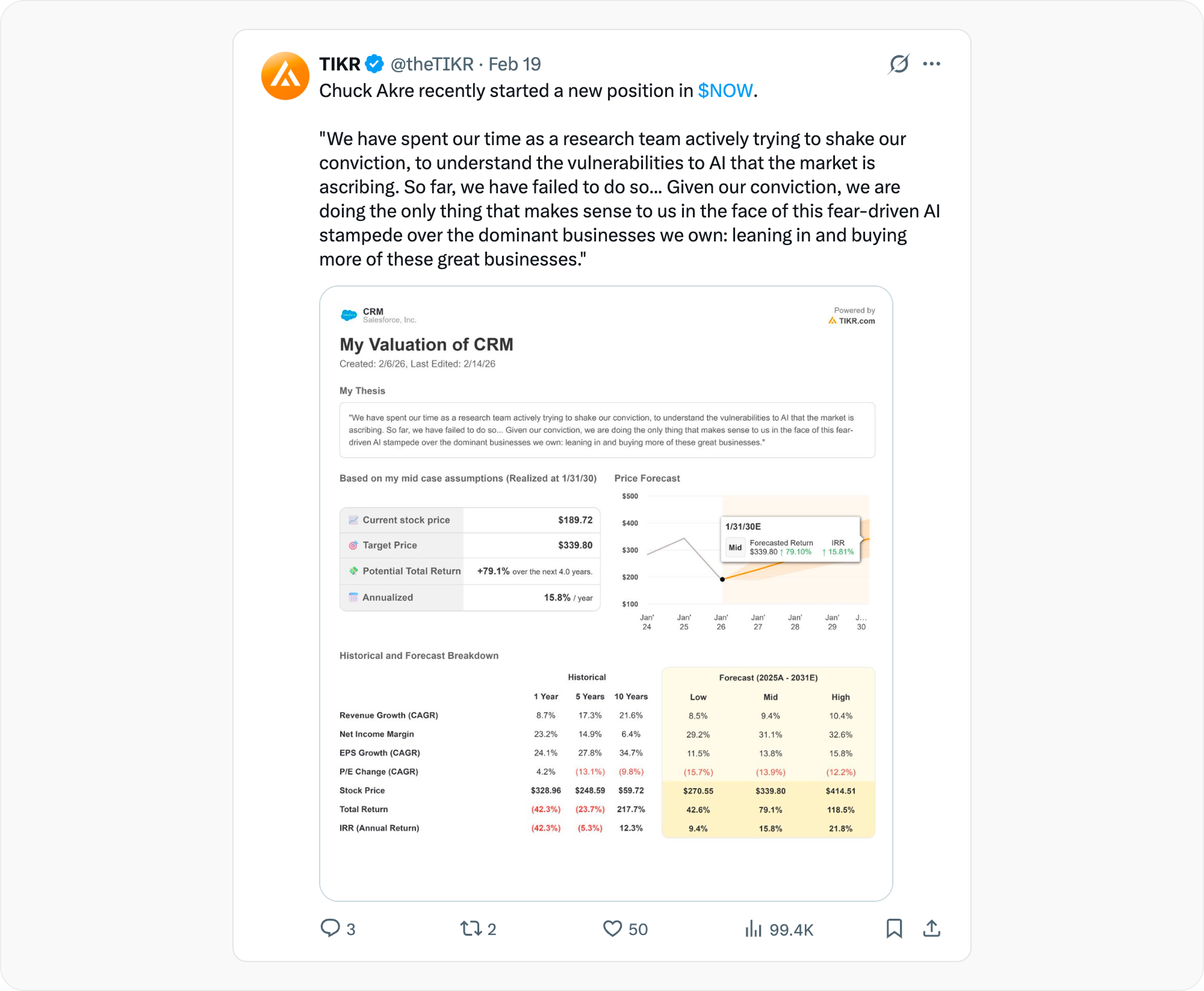
We designed an export system that generated clean, visual outputs optimized for social platforms like X — turning users into distribution channels for the product.
4 · Release
At launch, we introduced the Valuation Builder to existing users with an in-app announcement — letting them choose Guided or Advanced and create their first model in under a minute.
Key Learnings
The challenging part of this project was scope. There were many things we wanted to do, but you can only do so much with the resources you have. Working on a small team, you have to always push and pull to get things across the finish line.
Quite frankly they are not always perfect, but that's something that's great about software — it doesn't have to be. It can continue to evolve with the users, who are really the best input on the direction of a product. I had to learn not to make too many assumptions about what users might like, and to focus on making the best product I could at the moment, allowing feedback to inform what to do next.