Growth & Monetization
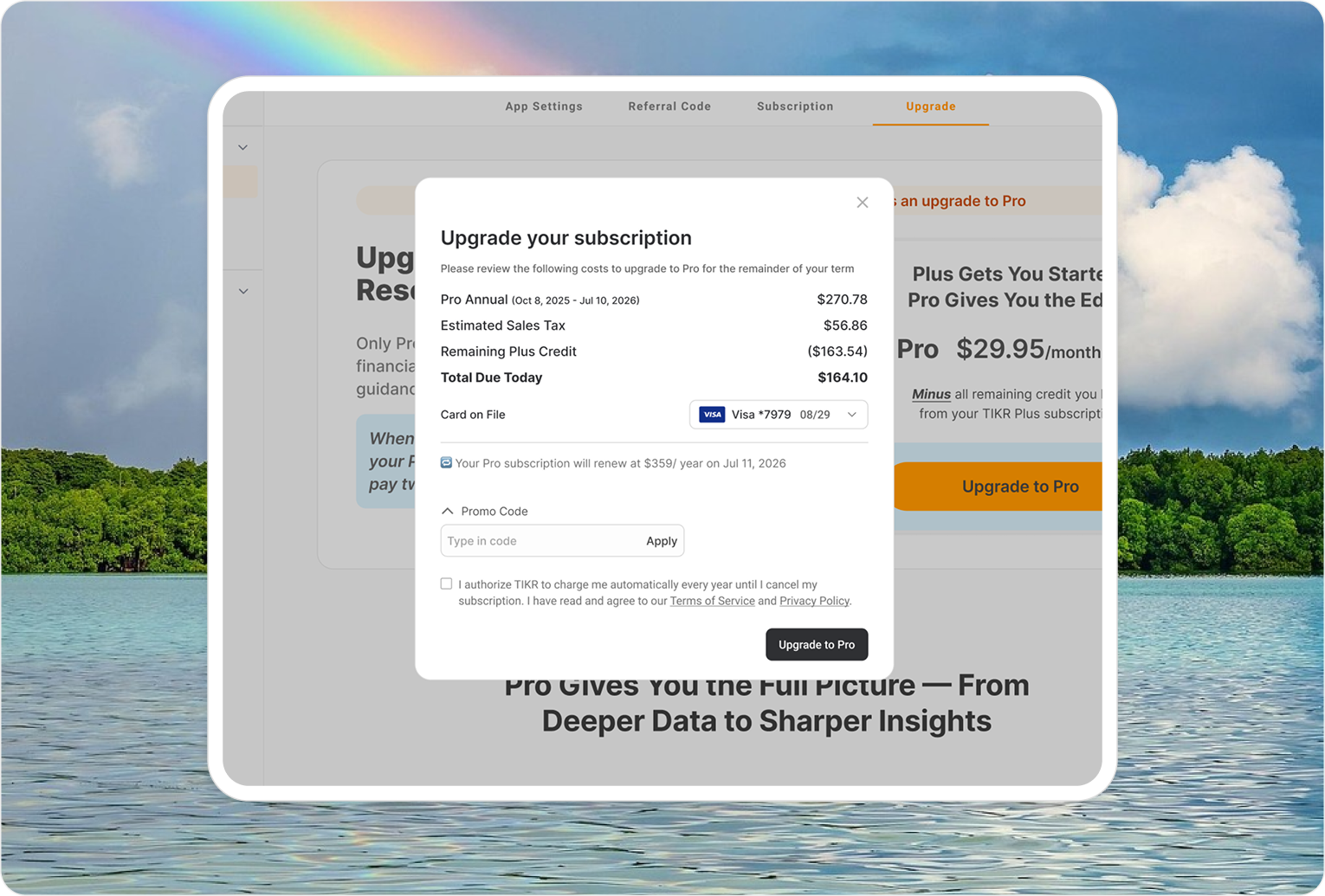
Led the design behind TIKR's monetization strategy: product tier restructuring, onboarding, billing, and account experience to move the average user toward higher-value plans.
Resulted in 20% year-over-year increase in revenue and the successful launch of a new premium tier priced at more than double the previous ceiling.
Role: Product Designer — design, planning, strategy, and managing task allocation to development
Team: CEO, Head of Growth, CTO, Engineering (5)
Timeline: ~8 months
Business Objective
The goal was to grow revenue per user and increase how often users encountered — and acted on — the product's value. We set out to:
- Move the average user toward higher-priced plans over time
- Increase our marketing frequency and touch points with our users
- Make product value obvious at more moments across the journey
- Reduce billing friction and support load
What was the Problem?
Value was real, but users rarely encountered a reason to pay more.
Users were given a lot more product functionality than our peers, and we had not raised prices for 5 years (a while). Additionally, new and experienced users saw the same generic experience and messaging, and expiring accounts churned quietly.
- Upgrade moments were rare and easy to ignore
- Lower tiers under-monetized heavy users
- Onboarding didn't adapt to a user's experience level
- Expiring, non-auto-renew accounts lapsed without a nudge
Some of our product issues were very glaring (users had to email support to upgrade their plans!)
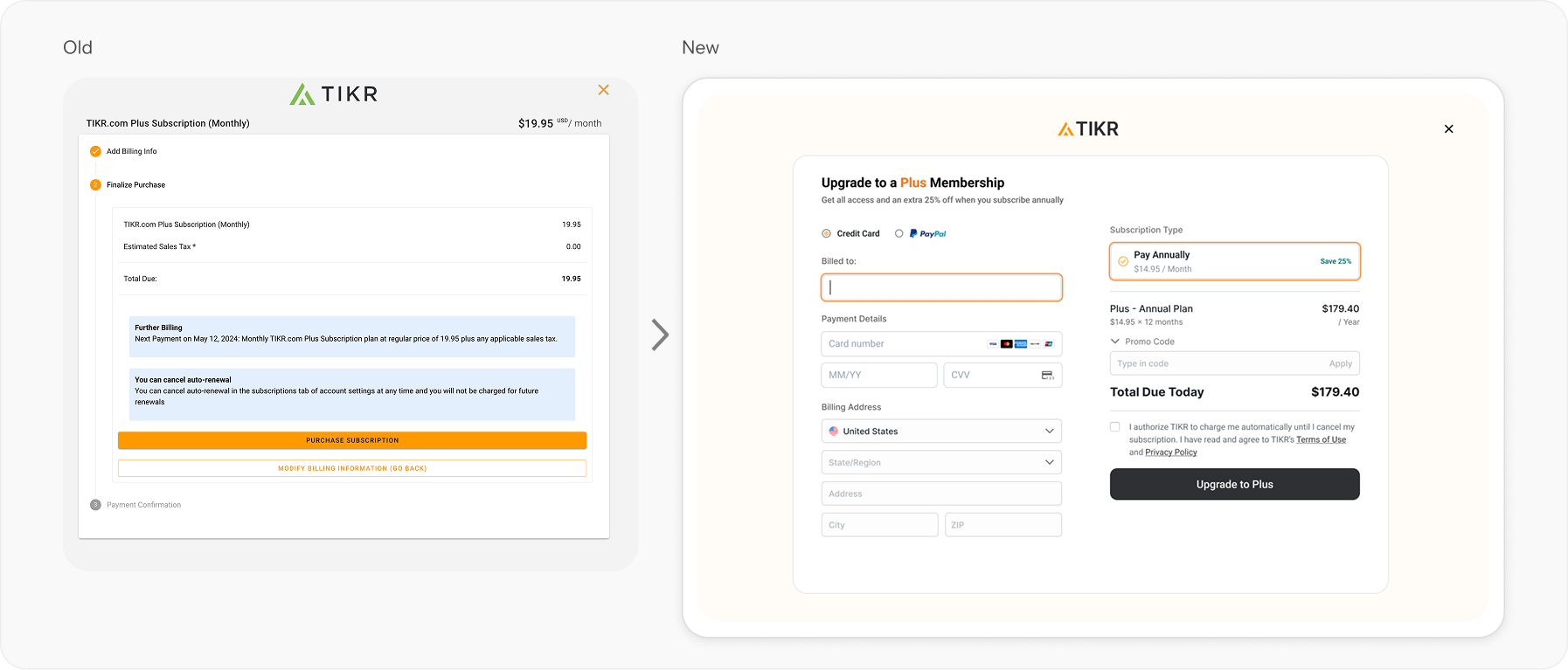
Redesigned checkout page. The old one didn't really work on mobile.
Key Design Challenges
- How do we restructure tiers without alienating existing users?
- Where do we throttle access and surface upgrades without hurting UX?
- How do we tailor onboarding to new vs. experienced users?
- How do we make billing, checkout, and renewal feel effortless?
Solution
Restructured product tiers & offerings
Working from user research, we identified our most engaged users — they were relatively experienced investors who valued doing their own research deeply and wanted more data.
Introducing a new premium Ultimate tier and tightening what lower tiers offered, so the product could guide the average user upward over time. Ultimate launched at $950/year (an annual-exclusive plan ensured a higher average user value and targeted our more committed and sticky users), up from the previous Pro ceiling of ~$380/year. Custom Dashboards were a key part of this.
Well-timed upsells & paywalls
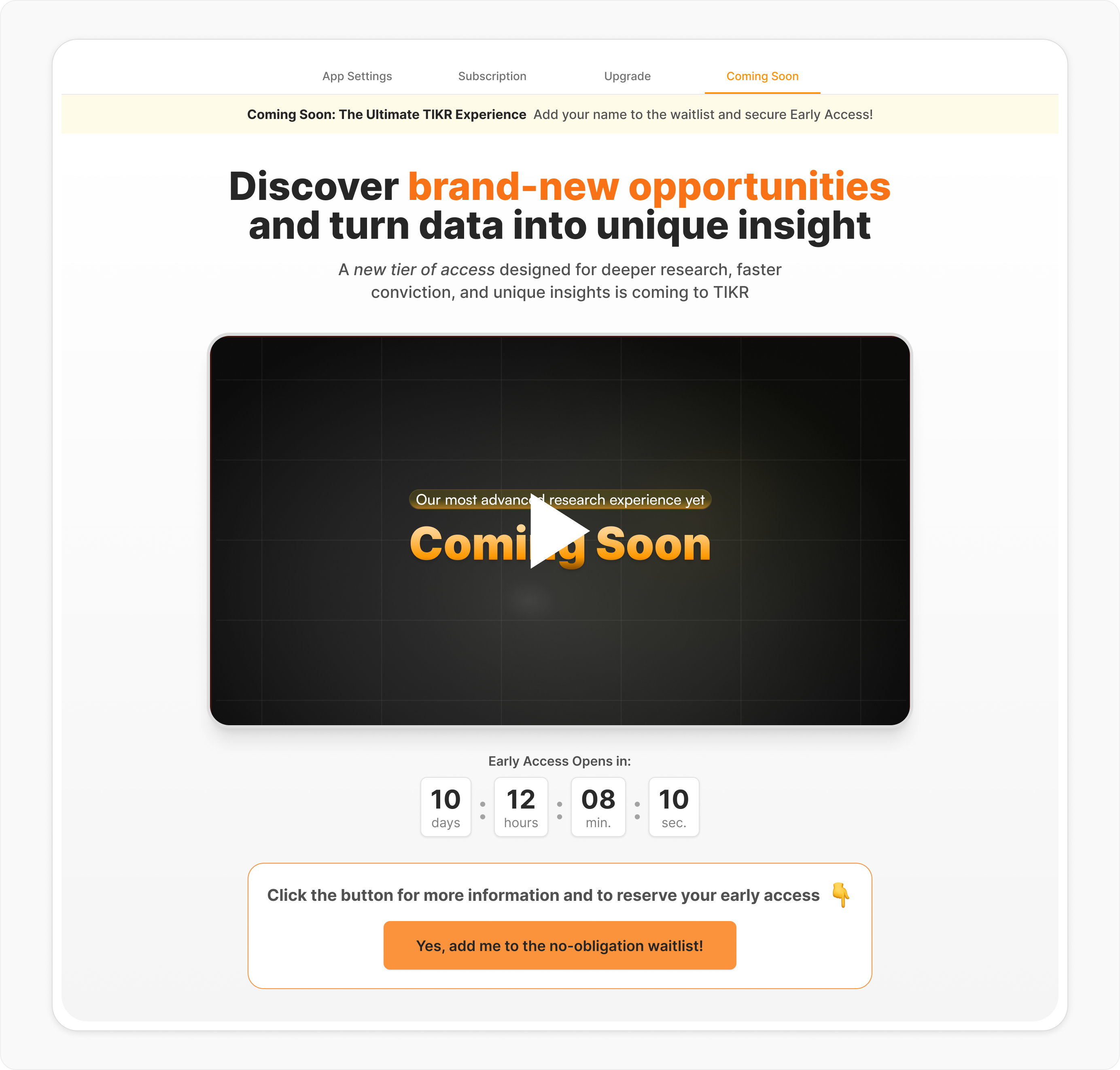
I designed upsells and paywalls where they made sense — using familiarity with each segment's usage to decide when, and how much, to throttle access and present the upgrade opportunity.
More frequent and improved marketing
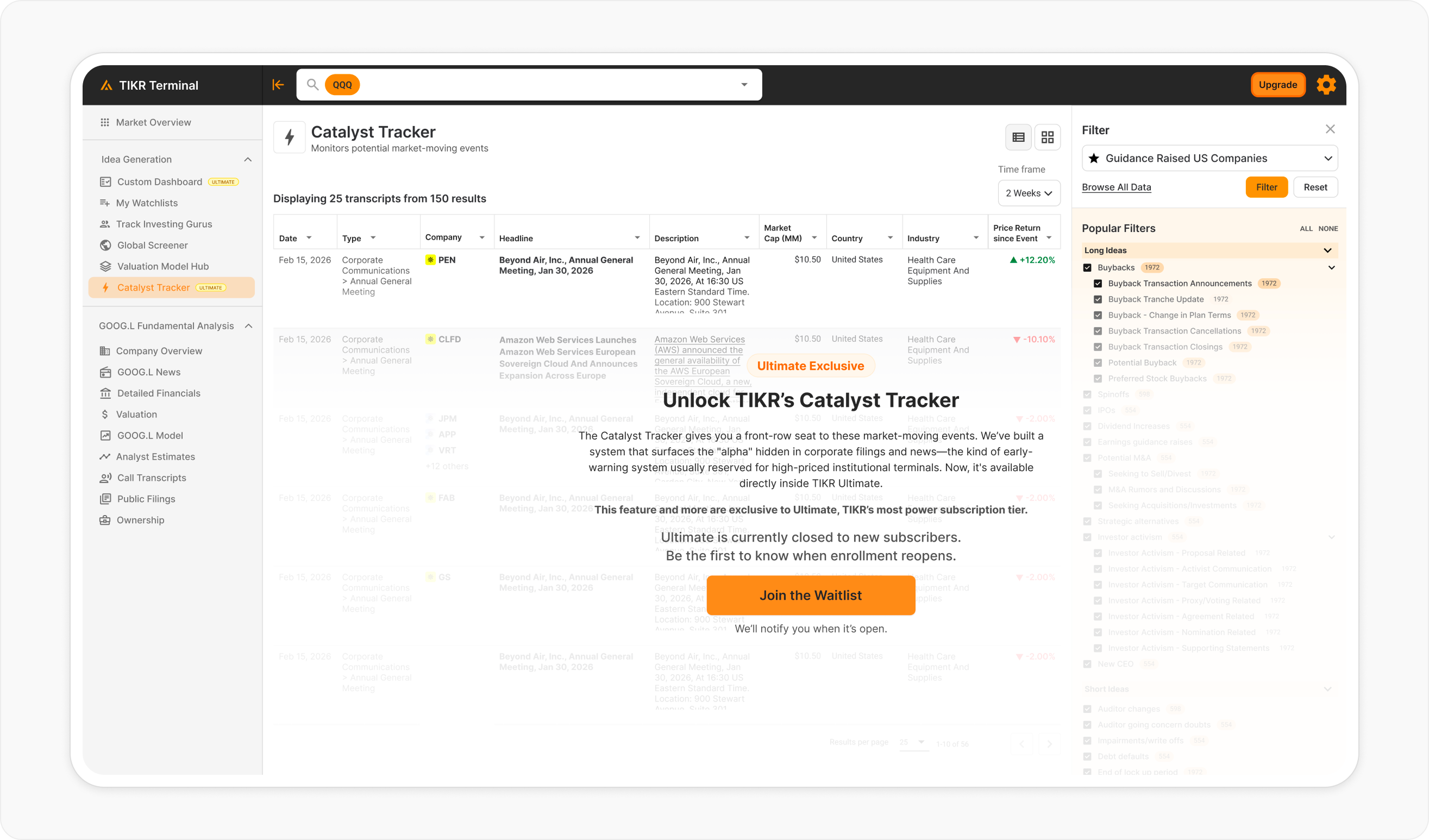
By increasing our marketing frequency (monthly instead of bi-annually) we created far more opportunities to demonstrate value — and built the pages, materials, and product visuals that made upgrading compelling at those moments.
Adaptive onboarding
I introduced onboarding steps that serve unique content to new users versus experienced ones — so first-timers get oriented while power users go straight to value.
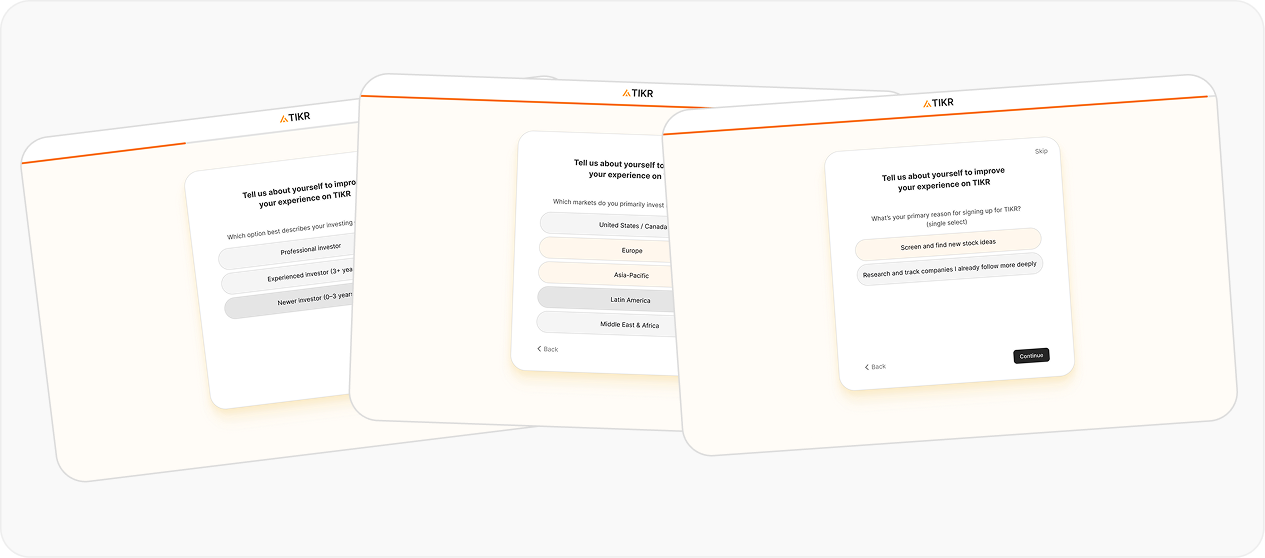
A few simple onboarding questions: what’s your experience level, where in the world are you based, and what’s your reason for signing up?
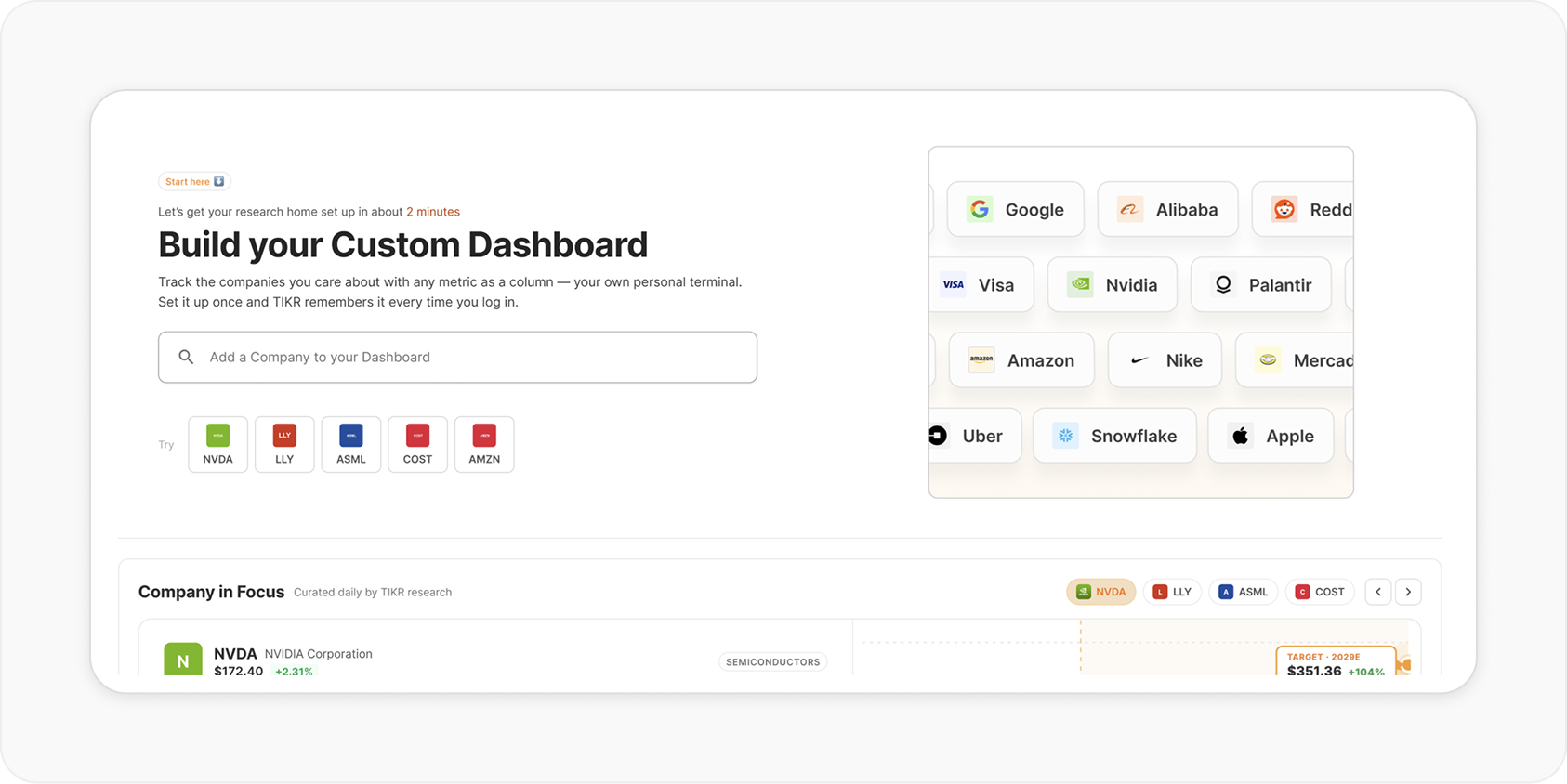
The set-up step that gets a new user straight to their first dashboard.
Results & Key Learnings
Users are willing to pay more for more. Put in your best effort to create something that wows them — it's fascinating and exciting to see them respond to things you haven't delivered to them before. People only know what you tell them, so be concise and deliberate with your messaging.